Installing boom spreaders is a meticulous process that requires a comprehensive understanding of the equipment and the right set of tools. As a boom spreaders supplier, we often receive inquiries from clients about the necessary tools for the installation of these essential construction machines. In this blog post, we'll delve into the key tools required for installing boom spreaders, along with insights into their functions and importance.
1. Wrenches and Socket Sets
Wrenches and socket sets are fundamental tools for any mechanical installation, and installing boom spreaders is no exception. These tools are used to tighten and loosen nuts, bolts, and other fasteners during the assembly process. A combination wrench set that includes both open-end and box-end wrenches can provide versatility and easy access to different types of fasteners. Socket sets, on the other hand, offer a more secure grip and are ideal for tightening or loosening bolts in hard-to-reach areas.
When selecting wrenches and socket sets for boom spreader installation, it's crucial to choose the correct sizes to ensure a proper fit. Using the wrong size can lead to stripped threads, rounded nuts, or incomplete tightening, which can compromise the stability and safety of the equipment. Additionally, quality is paramount. Invest in high-quality wrenches and socket sets made from durable materials to withstand the rigors of construction work.
2. Screwdrivers
Screwdrivers are essential for installing and removing screws that secure various components of the boom spreader, such as electrical panels, covers, and small accessories. There are different types of screwdrivers available, including flathead and Phillips head. It's important to have a set of screwdrivers with different sizes and blade types to accommodate the specific requirements of the boom spreader you're installing.
Some boom spreaders may also use specialized screws, such as Torx or Allen head screws. In such cases, having the corresponding screwdriver bits or tools is necessary. These specialized screwdrivers provide a better grip and are less likely to slip, reducing the risk of damage to the screws and the surrounding components.
3. Hammer
A hammer is a versatile tool that can be used for several purposes during boom spreader installation. It can be used to gently tap components into place, align holes for bolts, or remove stubborn parts. When using a hammer, it's important to choose the right size and type for the job. A lightweight hammer is suitable for delicate tasks, while a heavier hammer may be required for more robust applications.
Additionally, make sure to use a hammer with a rubber or plastic head to avoid damaging the surfaces of the boom spreader. This is particularly important when working on painted or finished parts.
4. Pliers
Pliers are useful for gripping, bending, and cutting wires, cables, and small metal components. They can also be used to hold objects in place during installation. There are different types of pliers available, including needle-nose pliers, combination pliers, and wire-cutting pliers. Each type has its own specific functions and is designed for different applications.
Needle-nose pliers are ideal for working in tight spaces and grasping small objects. Combination pliers, on the other hand, offer a combination of gripping and cutting capabilities. Wire-cutting pliers are used to cut wires and cables to the appropriate length. Having a set of quality pliers in your toolbox can make the installation process more efficient and precise.
5. Measuring Tools
Accurate measurement is crucial for the proper installation of boom spreaders. Measuring tools such as tape measures, levels, and calipers are essential for ensuring that the equipment is installed in the correct position and alignment.
A tape measure is used to measure distances, lengths, and heights. It's important to use a tape measure with a long enough reach and accurate markings to ensure precise measurements. Levels are used to check the horizontal and vertical alignment of the boom spreader. A spirit level or a laser level can be used depending on the specific requirements of the installation.
Calipers are used to measure the thickness, diameter, and distance between two points. They are particularly useful for measuring the dimensions of components and ensuring a proper fit.
6. Power Tools
Power tools can significantly speed up the installation process and make it more efficient. Some of the power tools that may be required for boom spreader installation include drills, impact drivers, and angle grinders.
Drills are used to create holes for bolts, screws, and other fasteners. An electric drill or a cordless drill can be used depending on the availability of power and the specific requirements of the job. Impact drivers are similar to drills but provide more torque, making them ideal for tightening and loosening stubborn bolts and screws.
Angle grinders are used for cutting, grinding, and polishing metal components. They can be used to remove excess material, smooth rough edges, or cut through metal pipes and bars. When using power tools, it's important to follow the manufacturer's instructions and safety guidelines to avoid accidents and injuries.
7. Lifting Equipment
Boom spreaders are heavy and bulky pieces of equipment that require proper lifting and handling during installation. Lifting equipment such as cranes, forklifts, or hoists may be necessary to safely move the boom spreader into position.
When using lifting equipment, it's important to ensure that it has the appropriate capacity to lift the weight of the boom spreader. Additionally, the lifting equipment should be operated by trained and qualified personnel to ensure safe and efficient operation.
8. Safety Equipment
Safety should always be a top priority when installing boom spreaders. Safety equipment such as hard hats, safety glasses, gloves, and steel-toed boots are essential for protecting the installer from potential hazards.
Hard hats protect the head from falling objects, while safety glasses protect the eyes from debris and dust. Gloves provide grip and protect the hands from sharp edges and chemicals. Steel-toed boots protect the feet from heavy objects and falling tools.
In addition to personal protective equipment, it's also important to follow safety procedures and guidelines during the installation process. This includes ensuring that the work area is clear of obstacles, using proper lifting techniques, and following the manufacturer's instructions for installation.
Our Boom Spreaders Product Line
As a leading boom spreaders supplier, we offer a wide range of high-quality boom spreaders to meet the diverse needs of our clients. Our product line includes:

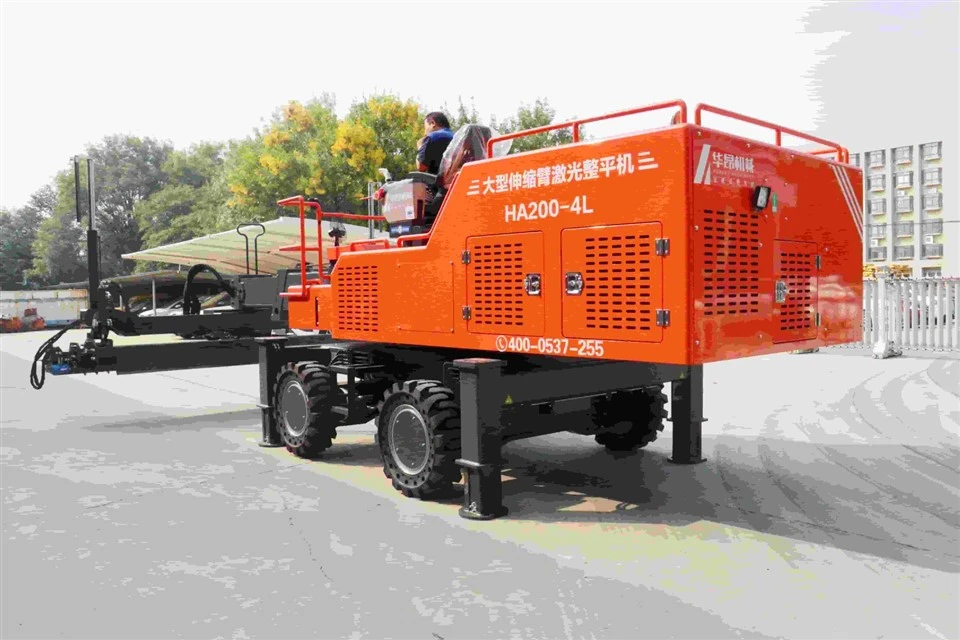
- Boom Spreader with Vibration: This innovative boom spreader is equipped with vibration technology, which helps to ensure a more even distribution of materials and improve the quality of the finished surface.
- Laser Leveling Machine With Telescopic Arm: Our laser leveling machine with a telescopic arm provides precise and efficient leveling for large floor areas. The telescopic arm allows for greater reach and flexibility, making it ideal for a variety of construction projects.
- Boom Emery Spreader: The boom emery spreader is designed for spreading emery and other abrasive materials on floors. It features a durable boom and a high-capacity hopper, ensuring efficient and consistent spreading.
- Large Floor Boom Spreader: This large floor boom spreader is suitable for spreading materials on large floor areas. It offers a wide spreading width and a high spreading capacity, making it ideal for commercial and industrial construction projects.
- Hydraulic Boom Spreader: Our hydraulic boom spreader is powered by a hydraulic system, which provides smooth and precise operation. It offers a high level of control and flexibility, allowing for easy adjustment of the spreading width and thickness.
Contact Us for Procurement
If you're in the market for boom spreaders or need more information about the installation process, we'd be happy to help. Our team of experts is available to answer your questions, provide technical support, and assist you in selecting the right boom spreader for your needs. Contact us today to start the procurement process and take your construction projects to the next level.
References
- Construction Equipment Handbook
- Manuals and Guides from Boom Spreader Manufacturers